Where to See the Finest Italian Antiquities
Antiquity generally means the distant ancient past (roughly 4500 BCE to 450 CE) and especially the Classical Greek and Roman eras. With millennia of history, antiques in Italy are especially iconic and admired for their archaeological and cultural contexts. Museums in Italy hold vast collections of ancient Roman artifacts, and antiquities from the Etruscan civilization, Greek colonies and beyond (even including medieval and Renaissance art). For lovers of history and antiques alike, Italy is unmatched. Each region’s state museums preserve world-famous artifacts – from classical marbles and mosaics to medieval statuary – making Italy a must-visit for antiquity fans.
Rome: Vatican Museums & Capitoline Museums
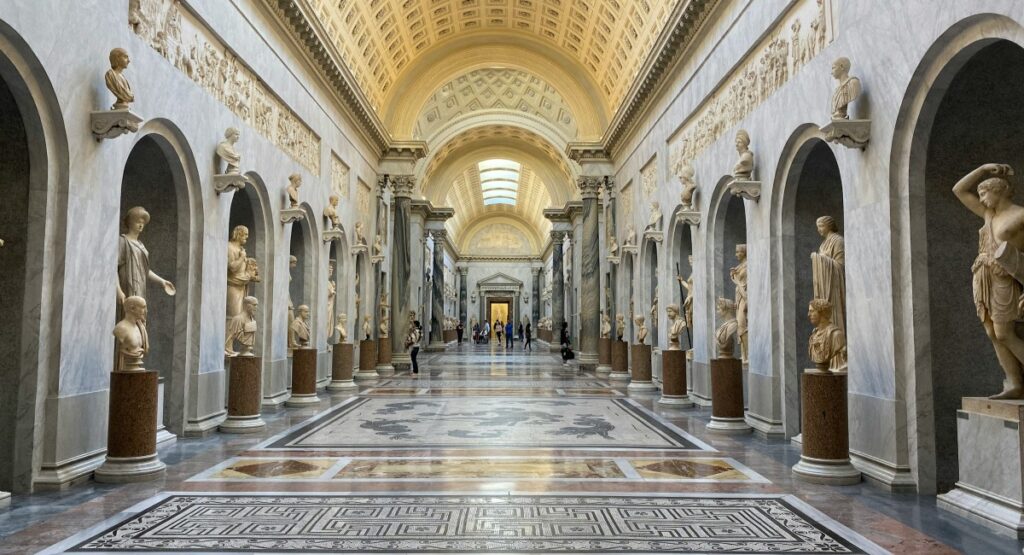
The Vatican Museums host some of the most iconic sculptures in the world — most famously Laocoön and His Sons and the Apollo Belvedere — works that helped shape Renaissance and later taste in classical art. These pieces anchor one of Europe’s richest public collections of ancient sculpture.
On Capitoline Hill, the Capitoline Museums present Rome’s civic collection, including the celebrated bronze Capitoline Wolf, an enduring symbol of the city alongside Roman imperial portraiture and civic antiquities.
Rome: Palazzo Massimo and Villa Giulia
The Museo Nazionale Romano’s Palazzo Massimo alle Terme is home to exceptional Roman sculpture and portraiture; the Hellenistic bronze known as the Boxer at Rest is a highlight that illustrates the realism of ancient bronzes.
Nearby, the National Etruscan Museum at Villa Giulia concentrates on pre-Roman Etruscan finds — terracotta sarcophagi, jewelry, and funerary art that are essential to understanding Italy’s earliest urban cultures. The museum’s Etruscan holdings are a cornerstone for anyone studying regional Italian antiquities.
Naples: Museo Archeologico Nazionale
Naples’ National Archaeological Museum brings together major Roman sculpture, mosaics, and an unrivalled array of material from Pompeii and Herculaneum. It also preserves the Farnese collection — including the monumental Farnese Hercules and the Farnese Bull — and some of the finest ancient mosaics to survive in situ. For the archaeology-minded, this museum is an essential stop to see both high art and antiques in Italy recovered from the Bay of Naples.
Florence: Museo Archeologico Nazionale and the Uffizi
Florence’s Archaeological Museum houses the celebrated Chimera of Arezzo, a striking Etruscan bronze that links Tuscany’s ancient past to its later artistic fortunes. The city also makes an important bridge to Renaissance culture: the Uffizi Gallery displays masterpieces such as Botticelli’s Birth of Venus, showing how Renaissance artists revived and reinterpreted classical themes — a useful context when considering antiques and antiquarian interest in Florence.
Reggio Calabria: National Archaeological Museum (Magna Grecia)
On Italy’s southern shore, the Museo Nazionale della Magna Grecia in Reggio Calabria presents the Greek-period legacy of Magna Graecia. Its star attractions are the Riace Bronzes, two life-size 5th-century BC Greek bronze warriors recovered from the sea — among the most celebrated surviving statuary from the Greek world. The museum showcases how Greece’s colonial influence became part of the peninsula’s material record.
Ravenna and Castel Sant’Angelo (short stops)
Ravenna’s National Museum complements the city’s world-famous mosaics with archaeological finds and funerary art that illuminate Byzantine and late-antique life in Italy. Castel Sant’Angelo in Rome, now a national museum, allows visitors to move from an imperial mausoleum to a fortified papal residence while seeing a mix of sculpture, arms, and decorative objects that trace Rome’s later history.
These public institutions, from the Vatican to Naples, and Florence to Reggio Calabria, are the places to see antiques in Italy within their historical narratives. Whether your interest is in classical sculpture, Etruscan craftsmanship, Pompeian domestic life, or Renaissance re-use of classical models, the museums in Italy preserve and interpret the corpus of treasured antiquities in ways that reward close study and repeated visits.