The Top Ten Roman Sights in Israel
Israel’s Landscape is Dotted with the Enduring Legacy of the Roman Empire.
From monumental theatres and aqueducts to desert fortresses and intricately decorated villas, Roman influence shaped cities, culture, and daily life. These ten sites offer thoughtful travelers a rich journey into archaeology, architecture, and history, revealing the empire’s reach and the fusion of cultures in Roman-era Israel.
1. Caesarea Maritima
Built by Herod the Great to honor Emperor Augustus, Caesarea Maritima in Israel was a thriving Roman port blending political, commercial, and cultural significance. Visitors can walk restored streets, stand in the Roman theatre, and explore the hippodrome where gladiators once battled and chariots raced. The aqueduct stretches toward the sea, while temple ruins reveal religious life. Coastal views and archaeological remains highlight Herod’s ambition and the engineering mastery that allowed this city to flourish at the edge of the Mediterranean.
2. Beit She’an National Park
Nestled in the fertile Jordan Valley, Beit She’an (ancient Scythopolis) was a bustling city in the Decapolis. Its theatre can seat up to 7,000, while colonnaded streets, bathhouses, and temples convey the rhythm of urban life under Roman rule. Walking through the restored streets, travelers can imagine merchants, soldiers, and citizens navigating the city center more than two millennia ago. The combination of scale, architecture, and historical layering makes Beit She’an a vivid window into Roman-era Israel.
3. Masada
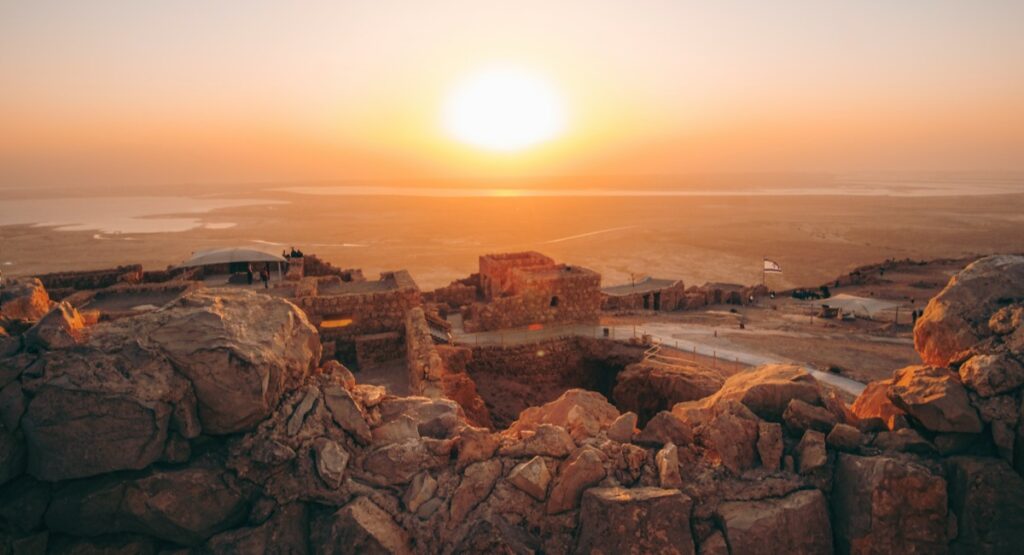
King Herod built Masada as a desert fortress, and it later became the last stronghold of Jewish rebels against Rome in 73 CE. The ruins of the Masada Fortress stand impressively well-preserved, giving visitors the chance to walk through the remains of King Herod’s palace, discover frescoes and ancient bathhouses, and trace the vast water system that sustained life atop the plateau. Roman siege camps and the dramatic ramp are still visible below, while sweeping views of the Dead Sea complete the experience.
4. Sepphoris (Tzipori)
This Galilean hilltop city served as a major Roman administrative center under Herod Antipas, King Herod’s son. Its theatre, aqueducts, and exquisite mosaics — including the famed “Mona Lisa of the Galilee” — reveal cultural fusion between Roman, Jewish, and early Christian traditions. The site provides insight into civic life, commerce, and artistic achievement, allowing visitors to experience the sophistication of a provincial Roman city while appreciating the unique blend of cultural influences that defined Sepphoris.
5. Avdat
Set amidst the dramatic Negev Desert, Avdat is one of the most renowned Incense Route desert cities in the Negev, uniquely reflecting both Roman and Nabataean influences. Its fortress, bathhouse, caravanserai, and early churches showcase the city’s strategic, commercial, and cultural significance. Framed by sweeping desert vistas, Avdat offers discerning travelers an immersive encounter with its defensive architecture and one of the most unique Roman sites in Israel.
6. Herodium (Herodion)
Herodium rises dramatically above the Judean Desert and was King Herod’s palace, fortress, and tomb. These Roman ruins in Israel reveal both ambitious combinations of architecture and sophisticated engineering, including terraced structures, fortified walls, and advanced water systems. Beyond its imperial grandeur, the site later served as a rebel stronghold during Jewish revolts, adding layers of historical significance. Visitors can explore these impressive ruins while appreciating beautiful desert views, gaining insight into Roman architecture, King Herod’s ambition, and the region’s turbulent history.
7. Apollonia–Arsuf
Perched on the Mediterranean coast near Herzliya, Apollonia–Arsuf was a Roman settlement later fortified as a Crusader fortress. Visitors can explore a Roman villa alongside remains of walls, a keep, and a dry moat. Set against sparkling coastal vistas, the site offers an accessible and engaging glimpse into the layered history of the area, where Roman foundations meet Crusader military ingenuity, making it a fascinating destination for thoughtful travelers.
8. Mazor Mausoleum
Dating to the 3rd century CE, the Mazor Mausoleum is among the few Roman sites in Israel to survive largely intact. Later converted into a sacred site, it offers fascinating insight into Roman funerary architecture and practices, from structural layout to decorative details. The mausoleum stands as a rare example of Roman craftsmanship and design in the region, and its preservation allows for a direct connection to the cultural and architectural achievements of the Roman era.
9. Bet Guvrin-Maresha National Park
A UNESCO World Heritage site, Bet Guvrin-Maresha National Park preserves Roman-era burial caves, olive oil presses, and water cisterns. Its subterranean networks provide a rare, tangible connection to daily life, religious practices, and agricultural innovation under Roman rule. Exploring both caves and surface ruins, visitors encounter mosaics, architectural features, and artifacts that reveal the sophistication of this Roman settlement. Bet Guvrin-Maresha offers an immersive journey into the ingenuity and enduring legacy of Roman civilization in Israel.
10. Roman Remnants in Jerusalem
The remains of Roman Jerusalem encompass multiple archaeological sites that reveal the city under imperial rule. Highlights include the Cardo Maximus, a colonnaded main street, and excavations at the Davidson Center, showcasing streets, ritual baths, and civic structures.
These Roman ruins in Israel provide insight into urban planning, religious practice, and daily life. Later, the Crusaders fortified parts of the city, building walls, gates, and towers atop Roman foundations. Exploring Roman Jerusalem offers a contemplative, immersive experience of the city’s layered history and the architectural groundwork that shaped subsequent medieval fortifications.
Discover Roman-Era Israel’s Timeless Ancient Sites
From Caesarea to Masada, Israel’s Roman sites showcase the empire’s enduring legacy, offering immersive journeys through engineering, culture, and history. If you’re ready to start exploring this era of Israeli history for yourself, read about our Holy Land in the Time of the Caesars trip — a journey that brings this fascinating history to life.