The Grandest Byzantine Monuments in the World
The Byzantine Empire’s architectural legacy is best summed up by its soaring domes and golden mosaics – evidence of a civilization that fused Roman engineering with Christian art. For over a millennium, structures like Hagia Sophia in Istanbul dominated the skyline and the culture. Built under Emperor Justinian I in 532–537, Hagia Sophia is “one of the world’s great monuments”. Its vast central dome and richly decorated interior (now filled with marble, porphyry and gold mosaics) exemplify classic Byzantine architecture. In fact, art historians note that wall mosaics with gold backgrounds became standard for the grandest buildings of Byzantium. For nearly a thousand years, Hagia Sophia was the largest cathedral in Christendom and the center of religious, political and artistic life for the Byzantine world. It remains a breathtaking introduction to any tour of Byzantine monuments, a place where the majesty of the Eastern Roman Empire still resonates.
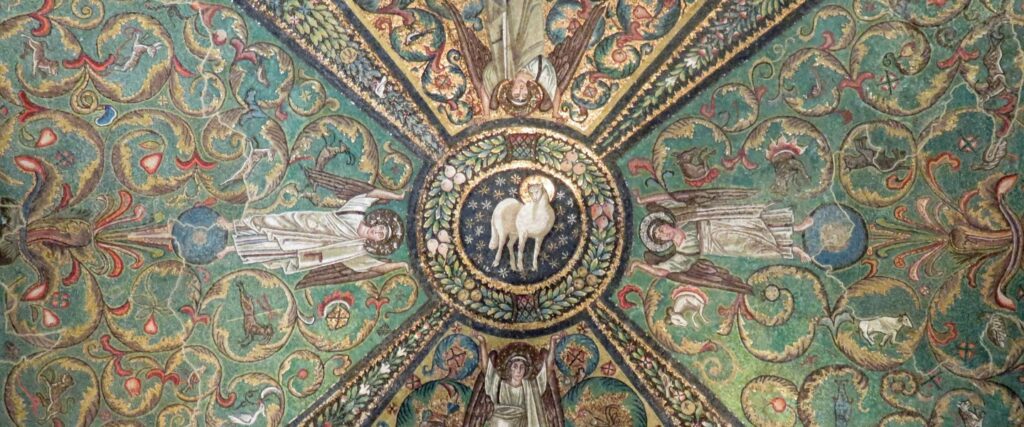
Another jewel of Byzantine art sits in Ravenna (Italy): the 6th‑century Basilica of San Vitale. Its interior is literally dripping with mosaics – the church is decorated with elaborate and glamorous designs throughout. San Vitale (a UNESCO World Heritage site) exemplifies how early Byzantine monuments combined Roman forms with Eastern ornament. The church’s mosaics (including the famous panels of Justinian and Theodora) glow with gold and colored stone, as do the interiors of Ravenna’s other 5th/6th‑c. churches. UNESCO notes that these Ravenna monuments are richly “decorated with precious marble, stuccos and mosaics” reflecting its history as a Western capital and later a Byzantine outpost. In San Vitale’s pink-and-white brick shell, octagonal dome and sanctuary, one sees the distinctive cross‑in‑square plan and flying buttresses of Byzantine architecture – a fusion of ancient and medieval styles.
The reach of Byzantine art extended far beyond Constantinople. In Venice, for example, Saint Mark’s Basilica preserves Byzantine artistry at its peak. Built in the 11th–12th centuries, the basilica is described as essentially Byzantine in its architecture, with more than 8,000 m² of glittering gold mosaics covering its walls and domes. As one historian observes, St. Mark’s even “abandoned the tradition of a rectangular plan in favor of a centrally planned Byzantine model,” reflecting Venice’s close political ties with Byzantium. In fact, much of its decoration was literally looted from Constantinople after the Fourth Crusade (note the famous bronze horses atop the façade). These spolia underscore Venice’s claim as the Byzantine Empire’s successor – as chroniclers of the time said, the four gilded horses symbolized Venice’s triumph over Byzantium. A visit to St. Mark’s (and its honey‑gold interior) shows how Byzantine monuments influenced even the Italian Renaissance.
In the Orthodox lands of Greece and the Balkans one finds countless Byzantine gems. Thessaloniki, Constantinople’s “Second City,” still preserves many grand churches and artifacts. Its Archaeological and Byzantine Museums display mosaics, icons and marble reliefs recovered from churches like Hagios Demetrios and the Rotunda. UNESCO exalts these: the mosaics of the Rotunda, St Demetrius and St David are among the great masterpieces of early Christian art. Even Athens – better known for the ancient Acropolis – has its share of medieval Byzantine monuments. Scattered around the city are 11th–14th century churches (Kapnikarea, Holy Apostles, Pammakaristos, etc.) that recall an age when the empire still held sway. Farther south, the hilltop town of Mystras (Sparta) was once the late-Byzantine capital of the Peloponnese. Today, Mystras is a breathtaking ruin of palaces, monasteries and frescoed churches, preserved in a medieval amphitheater of stone. In its heyday (circa 14th c.) Mystras was the center of Byzantine power in the Peloponnesus, with lavish palaces, churches and residences attesting to its former wealth. Surveying its abandoned but intact monuments (a UNESCO site) is like stepping into a Byzantine ghost town.
Unlike its architecture and mosaics, sculpture was a weaker suit of Byzantium. By tradition and religious feeling, the empire “inherited the Early Christian distrust of monumental sculpture,” so free‑standing statues were rare. Instead, the Byzantines excelled at relief carving, ivories and mosaic portraits. Still, a few Byzantine statues survive to hint at the lost tradition. The most famous is the Colossus of Barletta, a 5.11 m tall bronze emperor (5th or 6th c.) probably cast in Constantinople. This hulking figure is thought to be the largest Roman or Byzantine bronze statue to have survived intact. Another example was the equestrian statue of Justinian that once crowned the Column of Justinian in the imperial square – a colossal bronze equestrian statue of the emperor in triumphal attire. (That column and statue are gone now, but descriptions survive.) Even these rare pieces mix classical form with Christian imperial symbolism – a hallmark of Byzantine sculpture. In general, Byzantine art leaned heavily on mosaic and icon painting for figural representation, rather than on the free-standing statuary favored in ancient Greece or later Western Europe.
Experience the Grandeur of Byzantium Today
From the domes of Hagia Sophia to the ruins of Mystras, each monument tells a story of the Eastern Roman world. Together, they reveal an empire that shaped medieval Europe and the Near East through faith and artistry. Walking these sites today – gazing at Justinian’s mosaics, Byzantine capitals, or age‑old frescoes – one can sense the imperial pageantry and piety of Byzantium. Whether admiring a cathedral dome or a throne room, visitors are invited to step back a thousand years and experience living Byzantine monuments firsthand.
Ready to explore? Book a personalized Byzantine tour and traverse Istanbul, Ravenna, Athens and beyond – a journey through history with the greatest art and architecture of the Byzantine Empire.