Top Sights in the East: Experience Byzantine Architecture and Art
The Byzantine Empire, also known as the Eastern Roman Empire, was the continuation of the Roman Empire in the East. It shaped the spiritual, artistic, and political landscape of Europe and the Near East for over a thousand years. Even though its capital, Constantinople, fell in 1453, Byzantium’s influence still flows throughout churches, mosaics, and monuments across the former empire.
Here are eight awe-inspiring places where the world of Byzantium still comes to life:
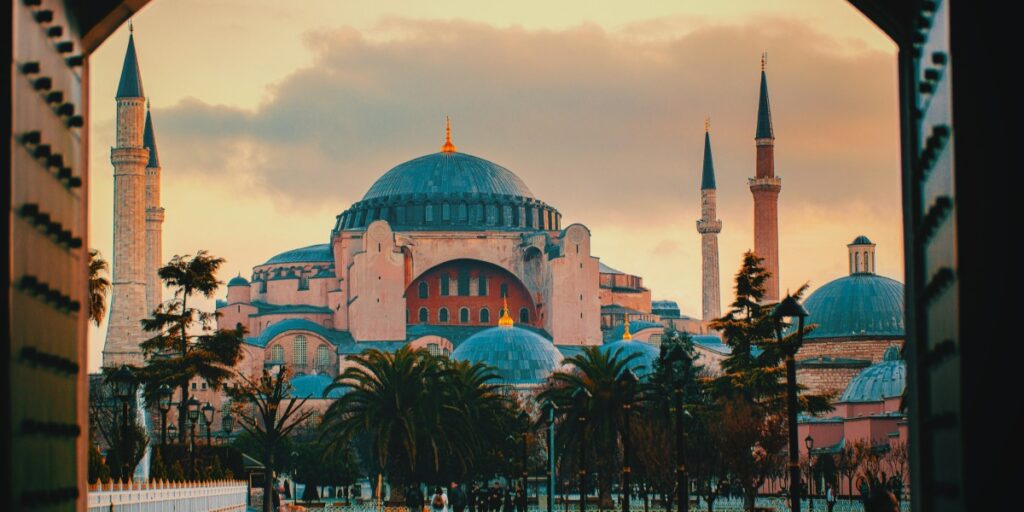
1. Hagia Sophia – Istanbul, Turkey
Hagia Sophia, meaning “Holy Wisdom”, is the crown jewel of Byzantine architecture and was built under Emperor Justinian in AD 537. Its vast dome, supported by a system of vaults and semi-domes, was once the largest in the world and seems to float above a sea of gold mosaics and marble. Its architectural style became a model for Eastern Orthodox church architecture and was later emulated by Ottoman mosques. It inspired the architecture for many other religious buildings and is renowned for its engineering and design.
It has served as a cathedral, mosque, and museum. Today, it functions again as a mosque and remains one of the most important monuments in world history. It symbolizes both the Byzantine and Ottoman eras. Few structures better capture the union of imperial power and divine ambition that defined Byzantium.
2. Chora Church (Kariye Mosque) – Istanbul, Turkey
Nestled in the quieter Edirnekapı district, the Chora Church is adorned with 14th-century mosaics and frescoes depicting the life of Christ and the Virgin Mary. It is a stunning example of Byzantine architecture. Its beautiful art reflects a period of spiritual renewal and artistic brilliance known as the Palaiologan Renaissance. Although it now functions as a mosque, many of the original masterpieces remain visible, offering a powerful glimpse into the inner world of Byzantine faith.
3. The Hippodrome of Constantinople – Istanbul, Turkey
The Hippodrome was once the social and political heart of the Byzantine capital and a massive arena for chariot races, imperial ceremonies, and public debates. It was the sporting center of Constantinople, with stands capable of holding up to 100,000 spectators. The Hippodrome was filled with statues of gods, emperors, animals, and heroes. Today, it is known as Sultanahmet Square, and is a historical place in Istanbul where visitors can see the remnants of the Obelisk of Theodosius, the Serpent Column, and the Walled Obelisk.
4. Monastery of Hosios Loukas – Boeotia, Greece
This serene retreat, nestled on the slopes of Mount Helicon in central Greece, is one of the finest surviving examples of Middle Byzantine architecture and mosaic work. Founded in the mid-10th century, the historic monastery features golden domes and luminous mosaics that reflect the height of 11th century Byzantine art and monastic life. It is one of the largest of three monasteries in Greece that have survived the Byzantine period and remains a peaceful place for reflection and historical immersion.
5. Mount Athos – Greece
Mount Athos is a self-governed monastic republic that has preserved Byzantine Orthodox traditions for over a millennium. Home to 20 monasteries, its remote peninsula setting has shielded it from time and modernity. It is known for its long Christian presence and enduring monastic traditions. Though access is restricted (and closed to women), the monasteries house thousands of manuscripts, icons, and liturgical objects that continue to nourish the Byzantine spiritual heritage.
6. Mistras – Peloponnese, Greece
A ghost city clinging to the slopes of Mt. Taygetus, Mistras served as a Byzantine cultural and administrative center in the empire’s final centuries. It experienced a period of prosperity and cultural growth during the Palaeologan Renaissance. Its preserved churches, frescoes, and ruins offer a poignant snapshot of civilization as it faded into history. Walking its quiet streets is like stepping into the last days of Byzantium.
7. Thessaloniki – Greece
Thessaloniki, the second city of the Byzantine Empire, is packed with early Christian and Byzantine monuments, many of which are UNESCO World Heritage Sites. From rotundas and basilicas to city walls and mosaics, the city showcases over a thousand years of continuous Byzantine life and faith.
8. Cappadocia – Central Turkey
In Cappadocia’s unique landscape, early Byzantine Christians carved churches, chapels, and monasteries directly into the soft volcanic rock. Many are adorned with colorful frescoes, preserved for centuries by isolation. The Göreme Open-Air Museum is a treasure trove of Byzantine spiritual expression on the frontier of the empire. Today, the region thrives with international tourism thanks to its exceptional natural wonders and religious heritage.
Byzantium Still Lives On
The Byzantine Empire may be gone, but it is far from forgotten. Through sacred spaces, stunning Byzantine mosaics, and enduring architectural forms, we can still see and feel the power of a civilization that bridged Rome and the Renaissance, as well as East and West.
These sights don’t just tell stories, they breathe life into an often forgotten world. If you would like to experience some of these amazing landmarks for yourself, check out our curated itinerary.