The Highlights of India
India is a country of extraordinary diversity, where ancient civilizations, empires, and spiritual traditions have shaped a landscape rich in cultural and architectural treasures. From marble mausoleums and Mughal forts to British colonial buildings and centuries-old marketplaces, the range of things to see in India is vast and compelling.
Here are some of the most significant highlights—each offering insight into India’s layered past and vibrant present.
The Red Fort, Delhi: Power and Prestige of the Mughals
Among the most impressive historical sites in India, Delhi’s Red Fort stands as a monument to the might of the Mughal Empire. Commissioned by Emperor Shah Jahan in the 17th century, the massive red sandstone complex once housed the royal court and military operations. Its design combines Persian, Timurid, and Indian elements, setting the tone for later Mughal architecture, including the Taj Mahal. Today, it remains a symbol of national pride and is the site of India’s annual Independence Day address.
Chandni Chowk: Everyday Life in the Old City
Steps from the Red Fort lies Chandni Chowk, one of the oldest and busiest markets in India. Established in the 1600s, it remains a hub of commerce and culture. Walking or taking a rickshaw through its narrow lanes reveals shops selling everything from silver jewelry and spices to traditional sweets. Sacred cows move alongside vendors and commuters—a reminder of the deeply ingrained spiritual practices in everyday life.
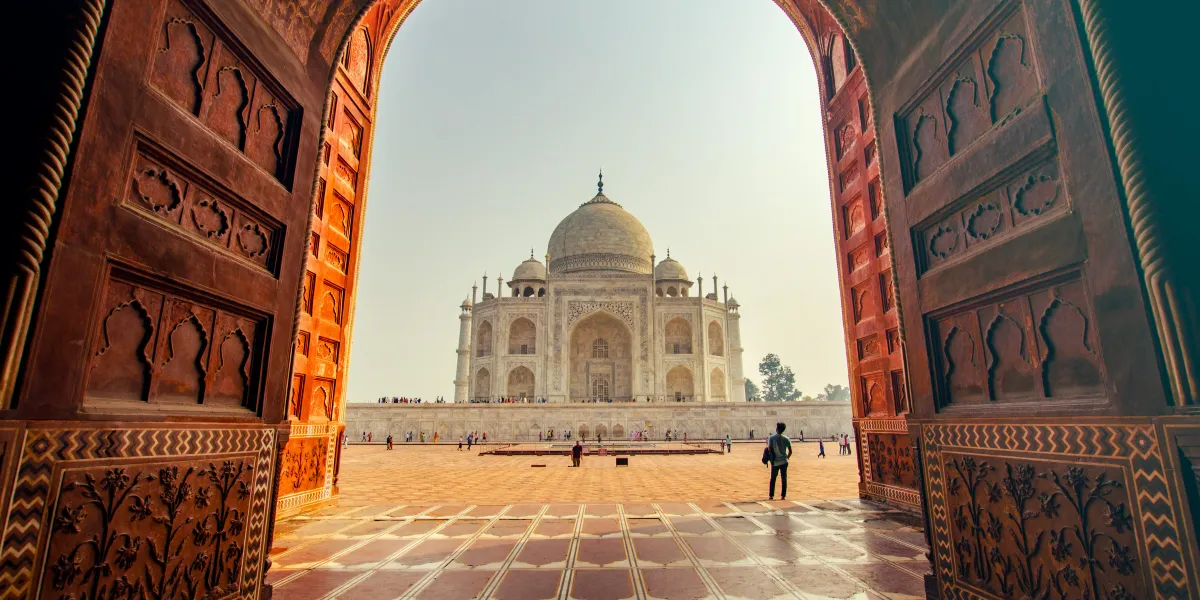
The Taj Mahal, Agra: A Monument to Eternal Love
Few landmarks are as universally recognized as the Taj Mahal, a UNESCO World Heritage Site and a masterpiece of Mughal architecture. Built in white marble between 1631 and 1648, it was commissioned by Shah Jahan in memory of his wife Mumtaz Mahal. Its symmetry, decorative inlay, and serene gardens create a space of remarkable beauty and emotional impact. The Taj Mahal is not just one of the top historical sites in India, but one of the most celebrated buildings in the world.
Jaipur: The Aesthetic of Royal Rajasthan
Nicknamed the Pink City, Jaipur is known for its distinctive rose-colored architecture and royal heritage. In 1876, the city was painted pink to welcome the Prince of Wales—a tradition that continues to define its identity. Highlights include the City Palace, the astronomical instruments of Jantar Mantar, and the delicate façade of Hawa Mahal.
Just outside the city lies the Amber Fort, a sprawling hilltop palace that once served as the seat of Rajput power. With its mirrored halls, carved doorways, and sweeping views, it offers insight into the opulence and defensive architecture of Rajasthan’s royal past.
Jaipur is also home to enduring ceremonial traditions. Painted elephants still appear during festivals and processions—an echo of their historical role in court rituals and military displays.
Mumbai: Colonial Grandeur on the Arabian Sea
Mumbai offers a different lens on India’s history—one shaped by Portuguese and British rule. Among the standout landmarks is the Gateway of India, built in 1924 to commemorate a royal visit and symbolizing British imperial entry into India. Its Indo-Saracenic design blends elements of Hindu and Islamic architecture with colonial motifs.
Close by, Chhatrapati Shivaji Terminus (formerly Victoria Terminus) is another UNESCO site. This active railway station is an outstanding example of Victorian Gothic Revival architecture, adorned with domes, turrets, and stained glass. Together, these structures offer a view into India’s colonial-era transformation and enduring infrastructure.
The Cultural Tapestry: Spiritual Symbols and Everyday Rituals
While architecture dominates many lists of things to see in India, cultural symbols are equally essential to understanding the country. Sacred cows, often seen roaming city streets, are revered in Hinduism as symbols of non-violence and maternal care. Elephants, too, are spiritually significant and are associated with Lord Ganesha, the remover of obstacles.
Markets, temples, festivals, and rituals fill daily life across India. Whether it’s the scent of jasmine and incense in a temple, the colorful saris in a marketplace, or the rhythmic ringing of prayer bells, India offers not just visual splendor but a deep, sensory experience rooted in tradition.
Discover More with Our Luxury Tour of India
India’s richness cannot be captured in a single visit, but the right journey can offer a powerful introduction to its most enduring landmarks and cultural highlights. Our luxury tour of India brings you face-to-face with world-famous monuments like the Taj Mahal and Red Fort, while offering curated experiences that reflect the heart of Indian culture. With expert guides, private transfers, and premium accommodations, this tour lets you explore India in comfort and depth.