The Ancient World’s Ten Best Preserved Cities
Ancient cities often exist as only fragments of what they once were; shattered stones, faded carvings, and weathered structures are sometimes all that remain of once-great civilizations. However, some ancient cities have endured, defying time, invasions, and natural disasters to remain remarkably intact.
These sites offer a rare opportunity for visitors to step back in time and see places that remain strikingly similar to how they once were. From an ancient Roman city buried by volcanic ash to a medieval Silk Road settlement abandoned on a mountainside, here are ten of the world’s best-preserved ancient cities.
1. Pompeii, Italy
When Mount Vesuvius erupted in 79 AD, Pompeii was buried under a thick layer of volcanic ash, becoming a haunting time capsule where even the smallest details of everyday life were preserved. Today, visitors can walk cobbled streets, enter houses with colorful frescoes and mosaics, and see ancient graffiti scratched into Pompeii’s walls. With public baths, temples, shops, and bakeries with working ovens, the preservation of Pompeii is a vivid glimpse into ancient history.
2. Petra, Jordan
Carved into southern Jordan’s red sandstone cliffs, the city of Petra is more than just its iconic Treasury building. Once the thriving capital of the Nabataean kingdom, Petra is a true marvel with its wide streets, towering facades, hidden tombs, and advanced water systems all carved directly into the stone.
3. Ephesus, Turkey
Once a major commercial hub of the Roman Empire, Ephesus continues to captivate with its scale and level of detail. Visitors can explore marble streets, bathhouses, temples, the Great Theatre, and the famous Library of Celsus. The site boasts a remarkably intact layout, giving visitors a clear sense of Roman city planning and public life.
4. Jerash, Jordan
Often overshadowed by Petra, the ancient city of Jerash in Jordan is one of the best-preserved Roman cities outside of Italy. Visitors can stroll its grand colonnaded streets, rest beneath Hadrian’s Arch, and explore preserved temples, forums, and fountains. Once host to thrilling chariot races, the city’s hippodrome also retains much of its original layout. Buried for centuries beneath desert sands, Jerash reemerged with an exceptional level of preservation, offering a vivid glimpse into Roman city life on the empire’s eastern frontier.
5. Tikal, Guatemala
Discovered after centuries lost beneath dense jungle, Tikal is one of the best-preserved ancient Maya cities in the world. Its towering pyramids rise high above the surrounding treetops, and its authentic layout allows visitors to walk where Tikal’s rulers once did. Protected as a UNESCO World Heritage Site, Tikal offers travelers the chance to explore a captivating, powerful city that has endured for over a thousand years.
6. Herculaneum, Italy
Also destroyed by the eruption of Vesuvius, the city of Herculaneum is often overshadowed by nearby Pompeii. While its neighbour was buried with volcanic ash, Herculaneum was covered with a thick avalanche of gas and volcanic matter, which preserved things that would usually not survive, such as wood, textiles, scrolls, furniture, and even food. The smaller scale of Herculaneum allows visitors to explore courtyards and private homes in a uniquely personal way, where bowls of nuts, jars of olives, tools, and jewelry remain exactly where they were left.
7. Ostia Antica, Italy
The ancient Roman city of Ostia Antica was a thriving port city for the Roman Empire. Unlike Pompeii or Herculaneum, it was not buried by disaster, but slowly abandoned. The city remains largely intact as a result, with apartment blocks, shops, temples, and taverns showcasing remarkably preserved architecture and offering insight into Roman urban life. Visitors can wander its wide, cobbled roads and lose themselves in a Roman city nearly 2,000 years old.
8. Volubilis, Morocco
Once a thriving Roman outpost in North Africa, Volubilis was known for its trade networks and olive oil production. Today, visitors can still walk Roman roads flanked by arches and temples, and admire detailed and colorful mosaics. Unlike other cities preserved by disaster, Volubilis endured through isolation, with its remains scattered across a serene setting of rolling hills and olive groves.
9. Ani, Turkey
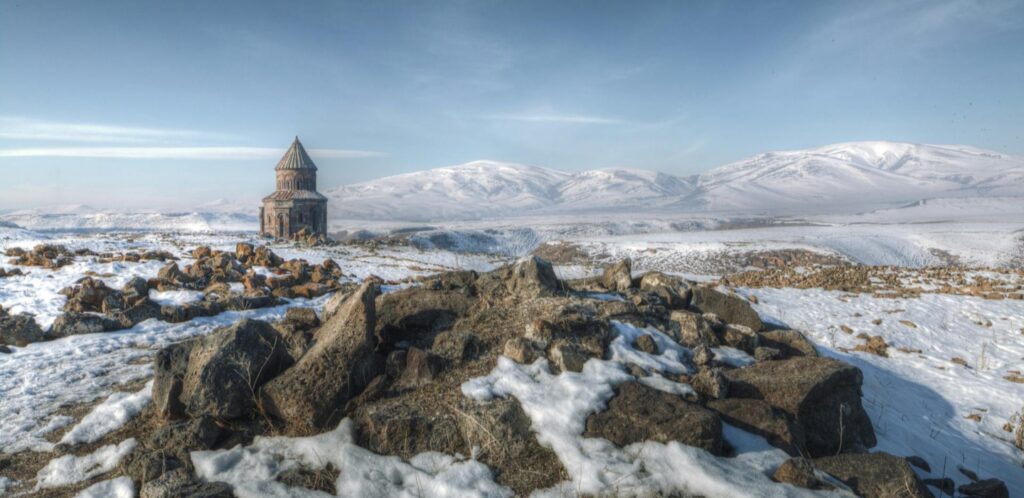
The least-visited on this list is the ancient city of Ani, in Turkey. Named the “City of 1001 Churches”, Ani is a forgotten medieval metropolis with towering cathedrals, citadels, and stone bridges that dot a windswept plateau. Once a thriving stop along the Silk Road, Ani’s isolated location not only preserved much of it, but made it one of the world’s most atmospheric ancient sites.
10. Palmyra, Syria
Nestled deep in the Syrian Desert, the ancient city of Palmyra was once a thriving trade post linking East and West. Its arid climate has helped preserve much of its architecture, including colonnaded streets, temple ruins, and a Roman amphitheater that dwarfs its visitors. As modern history has proven unkind to this ancient site, the city of Palmyra stands not only as a window into Syria’s ancient past, but also as a solemn reminder that the need to protect our world’s cultural heritage is of utmost importance.
Walking Through Time
These ancient cities are powerful bridges between past and present, offering visitors a chance to experience daily life across eras and their empires. Whether frozen by volcanic ash, buried beneath sand, or abandoned on remote mountainsides, stepping into these sites means stepping into history as it once was, and realizing just how close that distant history can feel. Explore our history themed-trips for a chance to visit some of the world’s best preserved ancient cities.